Beijing City - Exploring the Capital of History and Modernity
Beijing (Chinese name: 北京, pinyin: Běijīng) is the capital of China and one of the world's cities with the longest history and richest culture. Not only is it a political, cultural, and educational center, but Beijing is also an attractive destination with a harmonious blend of classical and modern architecture.
Beijing's rich cultural heritage is clearly reflected in its historical landmarks, traditional rituals, and diverse cuisine. In this article, studyinchina.io will take you to explore Beijing from a multi-dimensional perspective, covering its geographical location, historical formation and development, to its culture, economy, and future growth.
Overview of Beijing
Geographical Location
Beijing is located in northern China, part of the North China Plain. The city's terrain is mainly flat, with mountain ranges to the west and north. Beijing possesses all the favorable conditions of "timeliness, geographical advantage, and human harmony" to become a leading center for politics, economy, culture, and especially education in China and the region. While people immediately think of Shanghai for finance and economy, Beijing takes pride in its long-standing, high-quality, and comprehensive education system, unmatched anywhere in China.

Beijing boasts many famous historical sites such as the Great Wall to the north, the Forbidden City, the Summer Palace, and characteristic old neighborhoods, giving the city an atmosphere that is both ancient and modern. From high vantage points, you can gaze into the distance and admire the panoramic view of the city, where skyscrapers blend with historical architectural works, creating a beautiful picture of contrast and harmony.
Population
Beijing is one of the most populous cities in China, with approximately 21 million people. Accordingly, most residents live in developed urban areas, while the surrounding rural areas have a smaller population. Beijing is also home to a large international community, with many international students, experts, and diplomatic staff from all over the world. This creates a culturally diverse environment with many different languages and customs.
Historical Formation and Development of Beijing
The capital Beijing has a history of over 3,000 years and has experienced many ups and downs during its formation and development. In the 13th century, Beijing was the capital of the Yuan dynasty, later becoming the political center of the Ming and Qing dynasties. With many famous architectural works like the Forbidden City and its street layout, Beijing clearly demonstrates its cultural and historical values.
In the 20th century, Beijing underwent major upheavals, especially the Cultural Revolution. However, from the 1980s to the present, Beijing has developed rapidly, becoming one of the major economic centers not only in the region but also globally. International events held in Beijing (such as the 2008 Olympics), scientific conferences, and the movement of global citizens have affirmed Beijing's role on the international stage.
Weather and Climate
Beijing's climate is characterized by a temperate continental climate, with four distinct seasons. Winters are usually cold and dry, with temperatures potentially dropping below zero, while summers are hot and humid. The distinct seasonal changes in Beijing give the city its unique beauty.
Spring and early summer are ideal times to visit Beijing, when the climate is mild and the trees are lush green. Autumn is also a beautiful time with golden leaves, offering a relaxing and romantic atmosphere for visitors. The cold winter can be a challenge for those not accustomed to the cold, but it's also a time to enjoy characteristic hot dishes. Especially, if you want to see snow, winter is the ideal time to travel to northern China.

Beijing Culture and Cuisine
Characteristics of Beijing People
Beijing people in particular and Chinese people in general are famous for their qualities of perseverance, dynamism, and friendliness. The tradition of "warm hospitality" has been preserved through many generations. If you have the chance to be here, you will easily notice the smiles and help from local people.
Generally speaking, Beijingers are evaluated as simple, profound, capable yet modest. They live with a strong sense of responsibility towards all surrounding relationships and towards society. The cultural diversity brought by people from other regions also creates a rich environment of cultural exchange. Facing traditional aspects influenced by globalization, the people here always know how to integrate while preserving their own identity.
Language
The official language used in Beijing is Chinese (Mandarin), but due to tourism development and cultural exchange, English is also becoming increasingly popular. Many people working in the service sector, especially young people, can communicate in English, making it easier for tourists to learn about the culture and visit the city. If choosing an area for international students to study, enhance academic capacity as well as foreign language skills, Beijing would be the top choice. Because this city offers an excellent environment for practicing Chinese.
Festivals and Traditional Customs
Beijing is the cultural and historical capital, where traditional values exist and flourish. Lunar New Year (Spring Festival) is the most important and anticipated festival of the year in China, including Beijing. This is a major traditional festival, held in late January or early February, depending on the lunar calendar. Throughout the festival period, families reunite, prepare reunion meals, and visit relatives and friends.
In addition, Beijing residents look forward to the Mid-Autumn Festival every year.
The Mid-Autumn Festival is an occasion for families to reunite and enjoy characteristic mooncakes. On Mid-Autumn night, people will admire the moon, eat mooncakes, and share traditional stories. The customs of the Mid-Autumn Festival in Beijing include:
- Enjoying mooncakes: This is an indispensable specialty food during the festival. Mooncakes have various fillings, from red bean to lotus seed, and are often given to friends and relatives.
- Admiring the moon and singing traditional songs: Beijing residents will gather with family, admire the moon, and sing traditional songs about the moon and reunion.
In addition, the Lantern Festival, Qingming Festival, Double Ninth Festival,... are all traditional beauties preserved in the lives of Beijing residents.
Characteristic Cuisine of Beijing
Beijing cuisine is rich and diverse, with famous dishes such as Peking duck, hand-pulled noodles, and tofu dishes. Peking duck is considered a symbol of the local cuisine, with its crispy skin and tender meat, it is definitely an experience not to be missed when visiting Beijing.
Other specialties like meat-filled buns, stirred soup, and traditional pastries can also be found throughout the city. Night markets are also ideal places to enjoy many delicious and tasty snacks.
Art and Architecture
Beijing also stands out with its unique art and architecture. With monumental architectural works like the Forbidden City, the Temple of Heaven, and the Great Wall, these are all cultural symbols with a long history. The combination of classical and modern styles has created a vibrant and fascinating living space.
In terms of art, Beijing has many theaters and museums displaying exquisite artworks, from traditional arts like lion dance and opera to modern cultural events. You can participate in performances or visit art exhibitions to feel the cultural values here.

Beijing Economy
Economic Development of Beijing
Beijing has risen to become one of Asia's leading economic centers and the headquarters of many large corporations. According to the latest data, Beijing's GDP reached approximately 3.6 trillion yuan, reflecting its outstanding economic strength. This robust development is not only due to its vast land resources but also strong investment from the Chinese government.
The city also attracts many foreign investors to participate in industries, services, and venture capital. Investment incentive policies have contributed to promoting sustainable development of the local economy. In particular, Beijing is focusing on high-tech fields, research and development, making technology a key driver for the city's future development.
Main Development Sectors
Beijing has diverse economic sectors, including:
- Information Technology: With the development of large companies like Baidu, Alibaba, and Tencent, Beijing has become one of the world's leading technology centers.
- Finance: China has established financial centers in Beijing, promoting the development of banking and insurance industries.
- Tourism: Beijing attracts millions of tourists each year thanks to its historical monuments and rich cultural festivals.
- Manufacturing: Although Beijing is shifting towards service sectors, manufacturing remains an important field, especially in food processing and household goods production.

Transportation and Infrastructure
The public transportation system and infrastructure in Beijing are undergoing strong development. The city has a very developed public transportation network, including subways, buses, and shared bicycles. The Beijing Subway is one of the largest networks in the world with nearly 25 lines and hundreds of kilometers of track, connecting areas from the center to the suburbs, meeting the travel needs of millions of passengers daily.
Buses also play an important role in public transportation, with thousands of routes covering the entire city widely. In addition, Beijing has heavily invested in a shared bicycle system, encouraging residents to use this mode of transport for short trips, contributing to reducing traffic congestion and environmental pollution.
Beijing's transportation infrastructure also includes highways and ring roads, helping to connect suburban areas with the center. The Beijing government continues to expand and upgrade infrastructure to meet the growing demand due to the continuous development of population and economy.
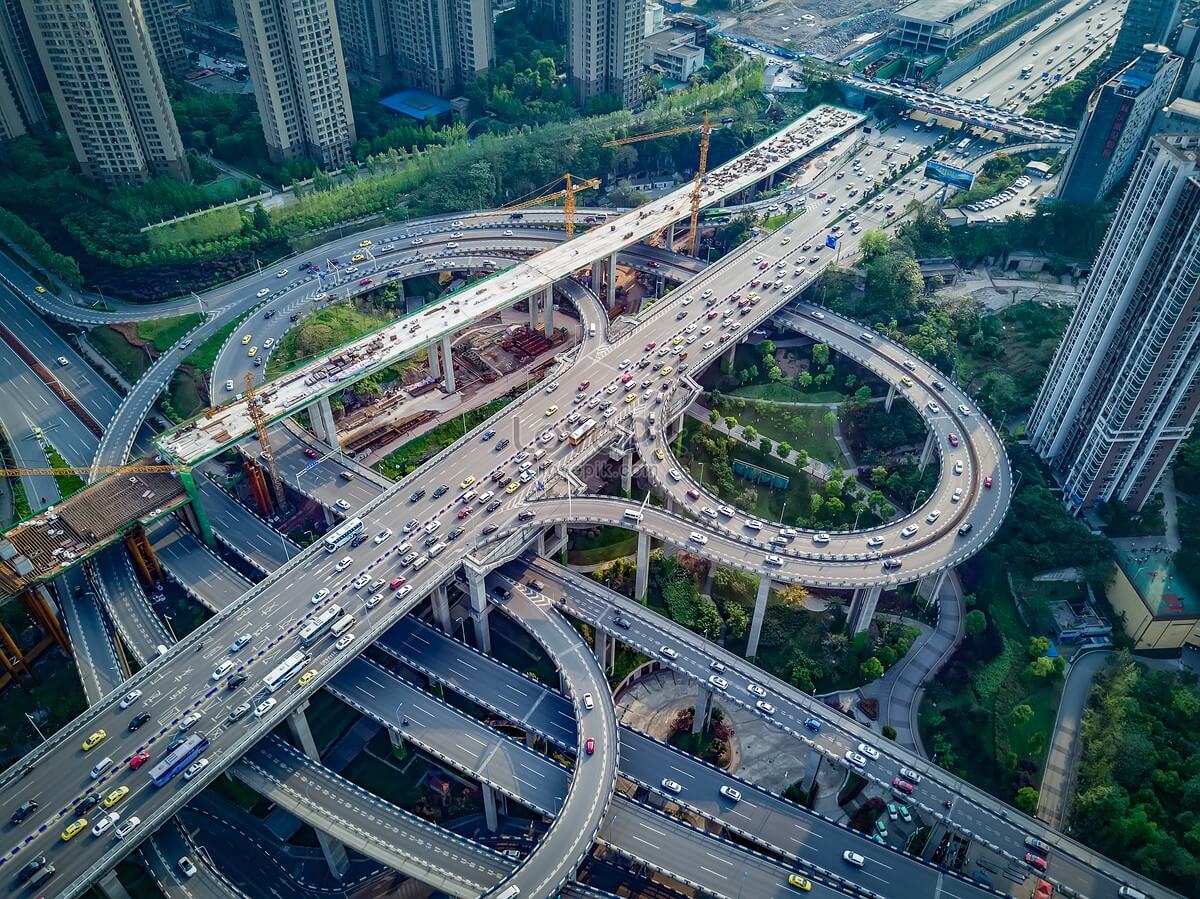
Public Transportation System in Beijing
Beijing's public transportation system is not only modern but also extremely rich. According to statistics, the city's subway currently has about 22 lines with a total length of up to 636.8 km, serving about 10.5 million passengers per day. Using the subway helps significantly reduce the number of vehicles, thereby reducing environmental pollution.
Besides the subway, the bus system also operates strongly with thousands of routes covering every corner of the city. We can easily see modern buses running on crowded streets, creating convenience for residents in daily travel.
In addition to traveling by bus and subway, Beijing has also developed bicycle services to encourage residents to use green transportation. The shared bicycle system is widely deployed, from central areas to suburbs, and is an effective solution to reduce traffic congestion.
Continuous reforms in the public transportation sector have helped Beijing gradually become a model city in traffic management. With a vision to 2025, many large projects are expected to be implemented, expanding the subway system and upgrading streets to improve the quality of life for residents.
Major Routes and Subway System
Major routes in Beijing not only play a role in connecting inner-city areas but also contribute importantly to the development of the public transportation system. Routes such as Line 1 and Line 13 are considered the backbone of the transportation network, connecting economic centers and densely populated areas.
With the Beijing Subway having 22 lines running from inner-city areas to suburbs, passengers can easily travel without worrying about traffic congestion. The routes are also invested synchronously in infrastructure and modern equipment.
Not only serving daily travel needs, the subway system is also very convenient for tourism, helping tourists easily access famous places like the Forbidden City and Tiananmen Square with just a few transfers.
Below is a list of some important subway lines in Beijing:
- Line 1: Connects Beijing West to Changchun.
- Line 2: Circles around the city center.
- Line 4: Connects suburban areas to the center.
- Line 6: Serves the western part of the city and Daxing.
- Line 15: Recently put into operation, connects Changping and surrounding areas.
These lines not only help transport passengers quickly but also contribute to promoting economic development for the areas they pass through. The Beijing government plans to expand more new lines in the near future to better serve the increasing needs of the people.
Tourism in Beijing - Must-Visit Destinations
Famous Scenic Spots
Beijing, the capital of China, is a city rich in history and culture, with many famous tourist destinations that cannot be missed. Below are the prominent landmarks that visitors should not miss when visiting Beijing:
1. Forbidden City (Forbidden City)
The Forbidden City, also known as the Imperial Palace, is one of China's most important historical monuments. This was once the palace of Ming and Qing dynasty emperors for over 500 years. With its magnificent architecture and rich art collection, the Forbidden City is an unmissable destination for those who love Chinese history and culture.
2. Great Wall of China (Great Wall of China)
One of the world's greatest wonders, the Great Wall of China stretches through many areas in Beijing and is an ideal destination for tourists wanting to explore one of the largest and longest-lasting defensive structures in human history. Wall sections like Mutianyu and Badaling are popular areas that tourists can easily access.
3. Tiananmen Square (Tiananmen Square)
Tiananmen Square is one of the largest squares in the world and an important symbol of Beijing. Located in the city center, Tiananmen has witnessed many historical events in China. Visitors can visit Tiananmen Gate, which features a statue of Mao Zedong and surrounding historical structures like the National Museum of Chinese History and Mao Zedong Mausoleum.
4. Lama Temple
The Lama Temple, also known as Yonghe Lama Temple, is one of the largest and most famous Buddhist temples in Beijing. This temple stands out with its exquisite architecture, large Buddha statues, especially an 18-meter-high Tantric Buddha statue carved from sandalwood. This is a wonderful destination for those wanting to learn about Buddhism and Chinese religious culture.
5. Summer Palace (Summer Palace)
The Summer Palace is one of the most beautiful historical and architectural monuments in Beijing. Located in the northwestern suburbs of the city, this place was once a retreat for the Chinese royal family. Visitors can admire the vast gardens, clear blue lakes, and ancient architectural works like the